Saturday, March 5, 2011

Muriel Award: Best Actress

Third place:


Kim Hye-ja, Mother [115 points / 19 ballots]

Second place:


Natalie Portman, Black Swan [124/19]

And your winner...

Other Stuff We Liked, Part 2: Actresses

Such is a testament to Natalie Portman's performance in Black Swan that she gets mentioned in three of the four below pieces. What does that mean for later...?
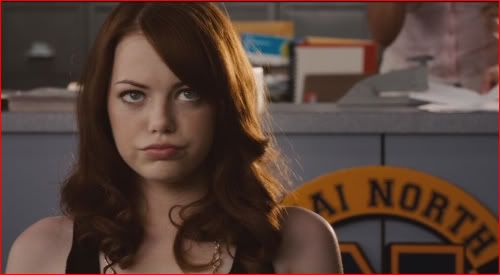


"It is a well-known claim of actors, oft attributed to the British stage star Edmund Kean but probably originated by some schlub pounding the dirt in a Greek amphitheater around the time Lysistrata had its premiere: dying is easy, but comedy is hard. As much as this deathbed classic is a Hollywood truism, there is apparently something even more difficult than peerlessly nailing a comedy role and that's getting any recognition for having done so. Of the 10 lead performance nominees at this year’s Academy Awards, seven of them bent over backward to keep their audiences from cracking a smile. (The eventual Best Actress winner delivered laugh after unintended laugh in her very serious turn as a bat-shit ballerina.) Even my own list of favorite performances, male or female, is heavily weighted toward searing dramatic turns. Yet year after year the performances that land at the top of my list are usually comedic in nature. (I’m thinking of Anna Faris in The House Bunny, Steve Martin in The Man with Two Brains and Jeff Bridges in The Big Lebowski, to name but just three.) With all due respect to Michele Williams, Annette Bening, Lesley Manville and Hailee Steinfeld, only one actress this year was able to convince me, if she were to somehow hijack Doc Brown’s DeLorean and travel back to the golden age of Hollywood screwball comedy, that she could be dropped, as is, straight into competition with the high-speed royalty of the genre for all the best and brightest roles. And I’ve little doubt not only that Emma Stone could hold her own, but that she would have the likes of Carole Lombard, Marion Davies, Katharine Hepburn, Irene Dunne and Jean Arthur looking over their shoulders when they weren’t scrambling to take her out for drinks.

In Easy A Stone effortlessly proved she had the stuff real stars are made of. In the real world, or at least in my high school, Stone's Olive Penderghast would have had every boy with a lick of sense at her feet. But here she’s nerdy and boyfriend-less (the movie’s most outrageous conceit), North Ojai High's heiress apparent to the spirit, if not the legacy or fate of Hester Prynne. Olive finds herself the object of salacious rumors, in part self-perpetuated, which result in her becoming the go-to girl for unconsummated, wholly fictitious trysts meant to prop up the reputations of her supposed partners, desperate geeks one and all. Of course the rumors go wildly out of control and Olive, in best-defense mode, embraces her nouveau-slutty persona, with results that are predictably outrageous but less predictably hilarious, and even at times painful. This young actress holds the screen without ever breaking a sweat—she’s in practically every scene of her movie, just like Oscar-winner Natalie Portman. The difference is that there’s no doubt Stone means to make us laugh.

In addition to effortless and natural appeal, Stone has got a real movie smart-ass’s way around a sharply written turn of phrase, or a squinty-smudgy smirk-mock laugh, displayed without turning the screen a red-headed shade of mean a la Molly Ringwald. (Maybe it’s her slight lisp that keeps her barbs from cutting too deep or seeming elitist.) But she can also handle the sweetness in the teen comedy recipe without feeling the need to put everything in collagen-inflated quotes or brush off the currents of love coursing through her relationship with her only-in-the-movies family in appeasement of the movie’s mockery-ready ideal demographic. Even her looks are appealingly off-kilter; her freckled nose crinkles up to meet those pale green eyes, which are spaced slightly further apart than the manual recommends and offset by her fiery red mane; and all of her features settle into a repertoire of quizzical looks, sharp glances and artfully arched eyebrows that suggest bemusement and the pursuit of the cleansing power of humor as the most potent intellectual defense against shallow high school hostility.

One thing Stone is not is a flavor-of-the-moment cutie pie. No, she’s a tart meringue, and on the strength of Easy A she’s fully ready to take on all comers for now and the foreseeable future. Like Faris, with whom she shared screen time in The House Bunny, Stone is built for the kinds of showcase vehicles that Hollywood forgot how to make 50 years ago. (With all due respect to the late, great Jane Russell, if someone ever decides to do a remake of Gentlemen Prefer Blondes there would be no need to go through all that messy auditioning and interviewing-- just give these women the ship and watch ‘em cruise.) It may be that Stone never gets another role like Olive-- her ascendance into the rebooted Spider-Man franchise bodes well for her profile, Q rating and checking account, but it’s unlikely to produce the sort of combustible energy she radiates in Easy A. As she becomes a star, I’ll eagerly await the career fulfillment of the kind of intelligence she’s displayed in her choices so far and continue to hope she remembers that anyone can take the money; it’s comedy that’s hard, and nothing worth doing comes easy. The glint in Emma Stone’s green eyes tells me that she’s ready to roll up her sleeves and get to work." - Dennis Cozzalio


"At first glance, the title of Mike Leigh’s Another Year obviously refers to the growing season of the garden tended by Tom and Gerri (Jim Broadbent and Ruth Sheen) through the course of the movie – a metaphor for hope, life, and the joys of growing old as part of a loving couple. As the film develops, however, Tom and Gerri are slowly replaced as the film’s focus by their friend Mary (Lesley Manville), an unhappy woman heading into middle age with a dead-end job, a futile love life, and a drinking problem. As we pay attention to Mary’s not-very-quiet desperation, the film’s title reveals a painful irony – while Tom and Gerri’s year is full of rewarding careers and dinners with friends and loved ones, Mary’s year careens from one disappointment to the next, with no end in sight.

One of the most difficult things for any actor to do is to play a character defined by weakness, passivity, and confusion without lapsing into stereotypes – the suffering saint, the hapless fool, the they-had-it-coming loser. What Manville succeeds in doing is to create a character of failure and pain without falling prey to condescension or alienation. Mary could be any one of us, and her misery is noone’s fault. She’s just another of the lonely people, not understanding what she’s doing wrong, not knowing where to go from here. And the degree of empathy and connection that Manville and Leigh provide between Mary and the audience is one of the purest, most beautiful things to discover in all of art – our simple recognition of a tortured soul." - Jeff McMahon


"Teenagers aren’t supposed to have their shit together. It’s a fact of life. As Ron Burgundy would say, it’s science.

However, if you’re a teenager growing up in the Ozarks, in a community where the inhabitants don’t seem to know the meaning of the word, taking care of your little brother and sister while your mother sits catatonic in the living room, looking for your possibly dead, meth-cooking father so you and your family won’t end up homeless, not to mention risking life and limb (both literally) just trying to locate the deadbeat son of a bitch, I guess getting your shit together would be something of a requirement.

As Ree, the 17-year-old who is forced to deal with all those aforementioned things, Jennifer Lawrence’s performance in Winter’s Bone consists of her character showing how growing up in these harshest of conditions has made her not just tough and mature, but a force to be reckoned with. She doesn’t back down as fearful relatives and neighbors tell her to quit with all the snooping around. And even when she gets brutally attacked and apprehended by the people responsible for her old man’s disappearance, her chances of making it out alive close to nil, she doesn’t become a sobbing, sniveling mess begging for her life. Her upper lip stays surprisingly stiff, telling her captors they can either kill her or help her. She actually tells them what they should do. Even when she’s bruised and bloodied, she remains the strongest person in the room. (It’s funny how magazines and other media outlets are out to show how smokin’ hot Lawrence looks in swimwear, considering she gives one of the most unglamorous performances in recent memory.)

It’s quite an impressive, resilient turn from Lawrence, who was previously known for being the resident jailbait daughter on "The Bill Engvall Show." Just as Ree is out to quietly, valiantly show she’s up to any challenge, so does Lawrence. It’s a performance that’s practically the flip side of Natalie Portman’s Oscar-winning turn in Black Swan. As Portman’s uptight, pampered ballerina drives herself batty in her quest to become the perfect lead in Swan Lake, eventually pirouetting to her own fatal demise, Lawrence’s ballsy, dirt-poor teen virtually goes through hell on earth, keeping not just a cool, brave head throughout but coming out of it sane and in one piece. Portman was really good in her performance, but Lawrence just kept it real in hers." – Craig D. Lindsey


"As good as Natalie Portman was in Black Swan, it stung to see Annette Bening passed over again in favor of a young ingénue, having previous lost - twice - to Hilary Swank. Granted, the previous two times I felt the winning performances were better and more deserving (in particular, Swank’s lacerating performance in Boys Don’t Cry easily bested Bening’s chilly housewife in American Beauty), but this time, for her rather remarkable work in The Kids Are All Right, she really deserved it.

Lisa Cholodenko’s excellent film, through its incisive yet non-showy script and lived-in performances, captured the unspoken subtleties of long-term relationships and family life, and no one in the cast excelled in their job more than Bening. As Nic, the more masculine, pants-wearing half of a committed lesbian relationship with Julianne Moore’s flighty Jules, she commanded the screen with her every scene, every line reading, every gesture. She wasn’t Hollywood Actress Annette Bening, she was Nic, and she did it without showing off. In her greatest scene (at Ruffalo’s dinner table having just pieced together the truth about Jules’s infidelity, as she silently smiles while imploding on the inside), she barely moves and doesn’t speak. She acts with her posture and especially her eyes, which shine in concert with her fake smile but more importantly reveal the simultaneous hurt, rage and disappointment tearing her apart on the inside, and it is riveting.

Her character, smart and no-nonsense to a fault but caring and fiercely protective of her family, isn’t always easy to like but is always a full-blooded, understandable human being. And one who is never at a loss to remind you that she needs your advice like she needs “a dick in [her] ass.” Well-put!" - Jason Alley

Friday, March 4, 2011

Muriel Award: Best Actor

This race ended up being a lot closer than I expected. A surprise to me - I did not see the support for the second-place finisher being as strong as it was. This is why I don't do prognostication.

Third place:


Tahar Rahim, A Prophet [90 points / 14 votes]

Second place:


Edgar Ramirez, Carlos [135/20]

And your winner...

Other Stuff We Liked, Part 1: Actors

Every year, as this whole shebang winds down, we like to spotlight some aspects of the past year's cinema that, while not a consensus favorite, still resonated with a fair portion of the voting body. So let's do that again!


"While Colin Firth's performance as Henry VI in The King's Speech struck me as incredibly affecting, James Franco's tour de force as misguided hiking adventurer Aron Ralston in 127 Hours absolutely floored me. It was the first time the actor struck me as a method actor who could some day be counted in the same class as Marlon Brando, Robert De Niro, and - hey, go with me on this - Steve Buscemi.

A tough, desperate piece of acting gold shines through every action of Franco's character. That it's based on a real guy's severe dilemma makes perfect stressful sense for the odd meta actor whose career is full of conundrums. Franco went to the dark side in his wrenching yet always relatable portrayal of human suffering and perseverance. That he had us so with him as he came out from that darkness into the most life-affirming shot of blinding light I've ever seen at the movies cements his ownage of the part for sure." - Daniel Johnson


"Ryan Gosling’s short but stunning roller coaster of a career has seen epic highs (The Believer, Half Nelson) and forgettable lows (Fracture), but his range and dedication remain unquestioned. He’s a true method actor, a meticulous throwback to the glory days of Pacino and DeNiro where every quiver, twitch, and wrinkle connects with the interior subtext of the character. He has played a skilled serial killer and a drugged-out teacher, a conflicted neo-nazi and a man enamored with a sex doll. But maybe not so ironically, Gosling is best known for playing a tortured romantic in The Notebook, a film that despite its charms isn’t especially challenging for his caliber of actor. All in all, mainstream success has eluded Gosling, and he’s flown somewhat under the radar except for those deeply entrenched in the film industry.

Yet 2010 seems to have changed everything for Gosling. His brilliantly nuanced performance as Dean in Derek Cianfrance’s devastating Blue Valentine feels like a watershed moment, a graduation of sorts to legendary status. The film’s flashback structure is wholly dependent on the contrasting tones of Gosling and his co-star Michelle Williams’ performances, and both are able to construct an entire universe of subtext out of small moments. As a man slowly being torn apart by hidden disappointment, Gosling’s Dean, balding but still piercing, is enthralling for his ability to circumvent cliche, building on the natural chemistry with Williams until every silent glance and subtle shrug entails something deeper -- an endless amount of variations within a constantly fluid relationship.

When Cianfrance cuts backward in time, Gosling brings a eager yearning to Dean as a younger man, full of vim and vigor but still aware of the harsh realities of everyday life. While Dean and Cindy meet by chance, every ounce of their relationship, both the good, the bad, and the ugly, feels dynamic, real, and fated, a momentary window into a relationship that can’t hit the reset button. The film’s overall power (gleaned from plenty of individual stunning moments) is a testament to the careful precision of Gosling’s movement and pitch. The sequence in the Future Room is especially devastating on a personal level, a greatest (or worst) hits collection of compromise, hope, dedication, and finally disintegration. Compare this heartbreaking valley with the glorious high of Dean serenading Cindy on a sidewalk stoop, “singing stupid” for a woman he can’t keep his eyes off, and the magnitude of Gosling’s performance becomes clear. Blue Valentine ends with Dean walking down the street away from Cindy, his daughter, and the life he wants so badly to sustain. As the fireworks of July 4th celebrations rip through the space, we are left with an iconic image of an actor taking it to the next level, and a fascinating and tormented character who can’t bare to look back. It's just too painful." - Glenn Heath Jr.


"Forget for a minute the success or failure of the "is it real or is it a stunt?" controversy at the core of Joaquin Phoenix's faux documentary I'm Still Here. Forget too the pouty dismissal the film mostly received by a lazy critical and entertainment journalism establishment that didn't take kindly to being one of the objects of the joke. Focus instead on Phoenix's risky, envelope-pushing, career-threatening yet wholly convincing performance as ostensibly himself, a promising young actor turned bloated, self-absorbed celebrity prepared to throw everything away for a vanity career as a rap act.

Consider too that this wasn't just a performance in the context of a 90-minute film. It was a nearly year-long bit of ballsy performance art in which Phoenix basically put his acting/celebrity career on hold to make a massive public ass of himself everywhere from a stage in Miami to the bright lights of The Late Show with David Letterman. Almost universally overlooked and misunderstood, it was not only the performance of 2010, it was possibly the performance of an actor's lifetime.

Even if you strip away the meat of the excoriating celebrity culture satire that is I'm Still Here (and why would you unless it hits too close to home?), you're left with a pretty brilliant comic performance worthy of This Is Spinal Tap or Waiting for Guffman. What's more, the comedy comes at the expense of Phoenix the actor who, even when you know it's a put on, isn't allowed the cover of an obviously invented comic character. What more can you ask from a guy?

But I'm Still Here isn't just a lark. There's a sting to it and it's due entirely to Phoenix who seizes the humanity in his character early on in the film. The resulting performance is shot through with a pathos that grounds it and keeps it from being an act of simple buffoonery. There's a genuine feeling of truth to the opening scene where an exhausted and depressed looking Phoenix laments his weariness at playing "Joaquin Phoenix." It's tempting to believe that, however much of this screen persona may be invented, this emptiness at least is shared by the real man.

Joaquin Phoenix, your masterpiece may have been greeted with a shrug by critics and audiences who have now moved on to the daily antics of Charlie Sheen, but you, sir, are a mountaintop water drop." - Craig Kennedy


"You’d be easily forgiven if you didn’t make an immediate connection between Niels Arestrup the grizzled veteran and the fresh-faced pretty boy featured in Chantal Akerman’s 1974 classic I, You, He, She or the many other French films where Arestrup used his youthful good looks to his advantage. Jacques Audiard has twice now employed the weathered face and cold eyes of Arestrup’s present appearance to personify heartless, dangerous men with zero moral standing. In The Beat My Heart Skipped, he played a drunken, cowardly, deadbeat nightmare of a father who convinces his son (Romain Duris) to help him collect on his debts and gets him mixed up in an underworld that doesn’t give friendly introductions. In A Prophet, Arestrup reappears as Cesar Luciani, the ruthless Corsican prison boss that takes the film’s lead Malik on as his young protégé. Both roles earned the veteran actor a Cesar, the equivalent of an Academy Award in his home country.

Simply put, Cesar Luciani is a man you don’t question, you don’t talk back to and you certainly don’t fuck with. When he tells Malik that he must kill a man in his cellblock or he will kill Malik, there isn’t a single moment of doubt that his fate has been decided. Cesar is a man of confidence, a prison lifer who still has ties to the outside world and acts as if his imprisonment is just an irritating handicap to conducting business. He carries himself with a masculine swagger that clears lanes as he walks the prison’s halls despite his Napoleon-like stature. He is a cruel man that has learned to do anything necessary to get results. The film’s brutal portrayal of life inside this cement box is so visceral that it can be difficult to watch. There were scenes, at least one involving Cesar, that I had to briefly look away from. But it is precisely these kinds of scenes that buy Audiard so much credibility with viewers, especially when his actors so fully inhabit their characters that you would have no trouble believing they’d spent a good portion of their lives locked within the confines of this prison.

As the film tracks Malik’s unlikely rise and Cesar’s inevitable fall there is always a palpable sense of danger. Cesar’s menacing looks never let you relax and there's the omnipresent fear that Malik may make that one crucial mistake that pushes him into a violent conclusion; there is, then, a moment of slight satisfaction when an utterly defeated Cesar sitts in the grey square, surrounded by snow and ice, completely alone. There are no words necessary, Arestrup’s face tells you everything you need to know about a man being forced to face the consuming emptiness that will haunt the remainder of his life. Niels Arestrup has grown into that rare breed of actor who is so compelling you would pay good money just to watch him sit and smoke a cigarette or read a book. I know I would." - Bryan Whitefield


"It’s difficult to capture exactly what’s so special about up-and-comer Michael Fassbender and indie vet Mark Ruffalo in Fish Tank and The Kids Are All Right, respectively. Both performances, each a supporting turn, act as a narrative and sexual catalyst, pushing their movies (and central female leads) into moral and interpersonal disillusion. Both performances also exist in similarly flawed films, each hampered by schematic screenplays. Yet it’s the former who remains mostly unscathed, managing to elude simplistic arcs and easy answers in favor of a certain level of intrigue and mystery.In Fish Tank, Fassbender plays one of Mom’s (Kierston Wareing) new lovers, and who comes to have a complex relationship with Mia, (Katie Jarvis) our lead. There’s a subtle, appealing body language to Fassbender’s performance, oozing sexuality and confidence, but gentle in motion and speech. The turn is perhaps so elusive as to eschew description in itself, but it’s with no doubt a beseeching, agreeable turn suffused with empathy and cozy compassion, always surprising and a appropriately warm welcome for this commanding presence." - Charles Lyons

Thursday, March 3, 2011

Muriel Award: Best Director

Third place:


Joel & Ethan Coen, True Grit [58 points / 9 ballots]

Second place:


Olivier Assayas, Carlos [67/11]

And your winner...

Wednesday, March 2, 2011

Muriel Award: Best Cinematic Moment

And now we get to my favorite category, in no small measure because of the wide and varied reactions it represents. This, for me, is the part of the ballot where each of our personal tastes and idiosyncrasies get to shine and stretch in the light.

That said, like the Godzilla fight in Crank II, I find myself agog that I'm left out in the cold on one particular scene. Actually, I think I went solo on about half my picks... but come on. Only one other voter tipped their cap to this insanity? If you've seen the film, you know what's happening: CAT MUNCHIES.

That said, here's a selection of the scenes that, while not winners, did receive a significant amount of love:

(Once again, I tip my cap to Mike D'Angelo for a few of these videos and hope he doesn't mind me jackin' 'em.)


Piranha 3D - Underwater ballet (couldn't find that scene, sadly, so here's the body shot scene, which achieves the same kind of prurient interest much quicker - though, also, with less nudity)

Untitled from Daniel Gemko on Vimeo.


127 Hours - Talk show


Scott Pilgrim vs. the World - Sex Bob-Omb vs. the Katayanagi twins


Sweetgrass - That sheep!

The Ghost Writer - The bitter end (click through to watch it)


Enter the Void - Opening credits


Dogtooth - anniversary dance

What could have topped these awesome slices of cinema, you say? Let's look and see!

Third place:


Black Swan - Nina Sayers IS the Black Swan [109 points / 11 votes]

Second place:


sk5
Uploaded by gemko. - Watch feature films and entire TV shows.

Let Me In - "Burning for You" [127/13]

And your winner...

Tuesday, March 1, 2011

Muriel Award: Best Screenplay

Third place:


Dogtooth (written by Yorgos Lanthimos and Efthymis Filippou) [70 points / 10 votes]

Second place:


True Grit (written by Joel & Ethan Coen, based on the novel by Charles Portis) [101/18]

And your winner...